Every bot has a part number
All 333 Builder Bots now carry a permanent production code and a barcode. It is generated, not assigned — which means no spreadsheet, no gaps, and no two bots can ever end up sharing one.
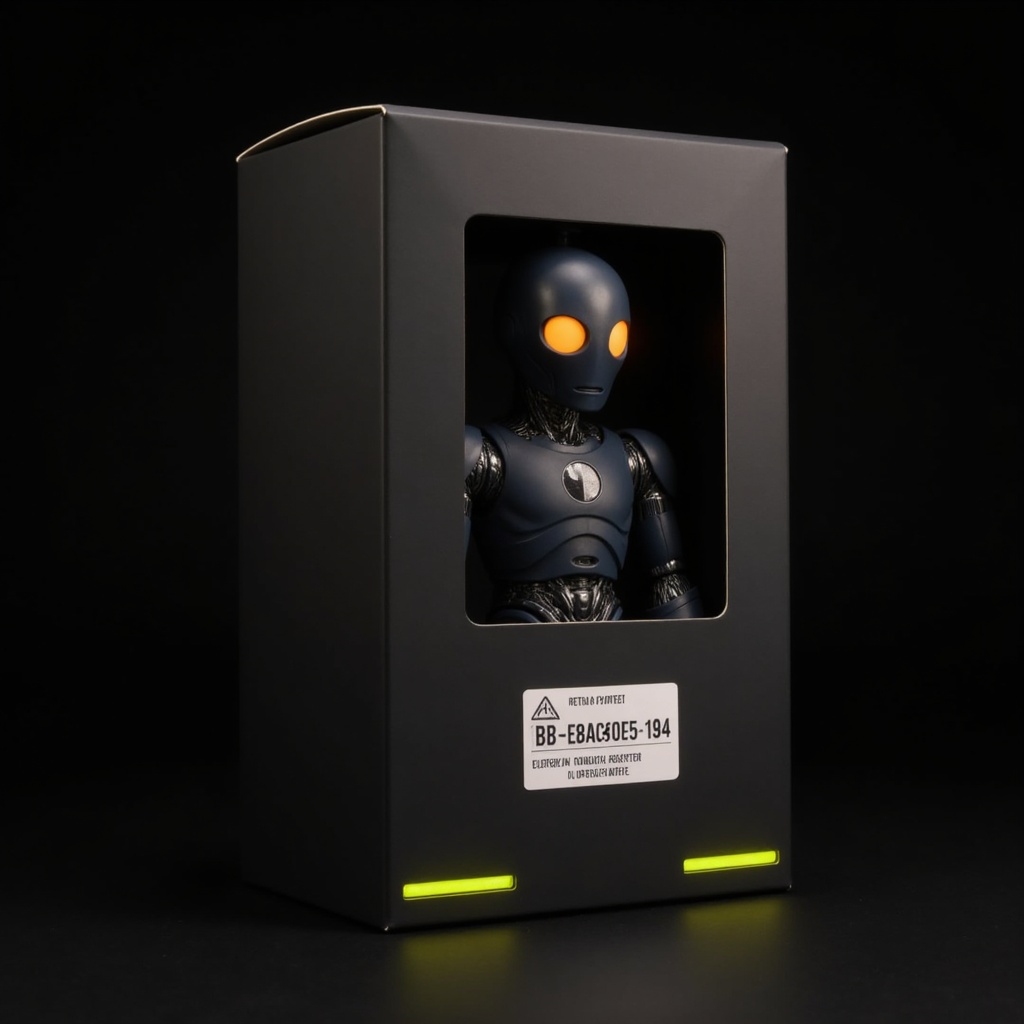
A Builder Bot is not only a digital thing. It is a redemption claim for a real, physical figure, and at some point that figure has to be made, boxed and shipped. The moment that becomes real, a question arrives that blockchains do not answer: how does a factory say which bot it means?
"Token 194" works on a block explorer and nowhere else. It does not survive a work order, a shelf label, a courier's scanner, or an email to a print shop. Physical things need part numbers.
The code
- BB
- Builder Bots.
- E8AC90E5
- Which collection — taken from the collection's own address.
- 194
- Which bot.
The important part is the middle. That is not a number we picked; it is the last eight characters of the collection's own contract address. Which means the code is not stored anywhere — it is calculated from what the bot already is.
Nobody assigns these. There is no list to keep in sync, because there is no list.
That sounds like a small distinction and it is not. A registry of assigned numbers is something somebody has to maintain: it can drift, it can be lost, two people can hand out the same number, and every new bot needs a fresh entry before it can be referred to at all. A derived code has none of those failure modes. It can be worked out from scratch, offline, by anyone, forever — and it runs backwards too. Scan the code and you know exactly which bot is in the box, with no database and no connection.
It also means the last bots in the collection already have their codes, before anyone has minted them. Nothing has to be issued later or back-filled.
The barcode

Code 128 — the format warehouses and couriers already use.
Every bot has one, as a print-ready vector, alongside a contact sheet that prints straight onto label stock. Any standard scanner reads it. No special app, no camera trick.
What the factory gets
One sheet, one row per bot, carrying only what someone has to physically make: the code, the bot's name, its guild, chassis, colour, headwear and eyewear, and its print filename. Every detail pulled from the collection's own published records rather than retyped, because a spec sheet that disagrees with the artwork is worse than no spec sheet.
What happens next
Serialised
Done. Every bot has its code, its barcode and its spec sheet.
Made and shipped
The production sheet drives manufacture. Each unit's code follows it from the bench to the courier.
Delivered — and your bot gets its name
When your bot reaches you, we register its serial as a permanent, resolvable name on chain. We cover that cost, not you.
Or choose your own
Optional, whenever you like. The serial keeps working either way — like vanity plates on a car that already has a VIN. No bot is ever left half‑finished because its owner did not get around to something.
That last point is the one worth holding on to. Because the name is derived rather than handed out, there is no such thing as an unclaimed bot. Every one of them has a working identity from the moment it exists. Choosing a custom name is an upgrade, never a requirement.
See all 333
Every bot, its guild, its traits and its production code.